
/
Blog/
Understanding SpO₂: What Blood Oxygen Levels Reveal About Your Client’s Health/
 30.11.20258 months ago
Understanding SpO₂: What Blood Oxygen Levels Reveal About Your Client’s Health
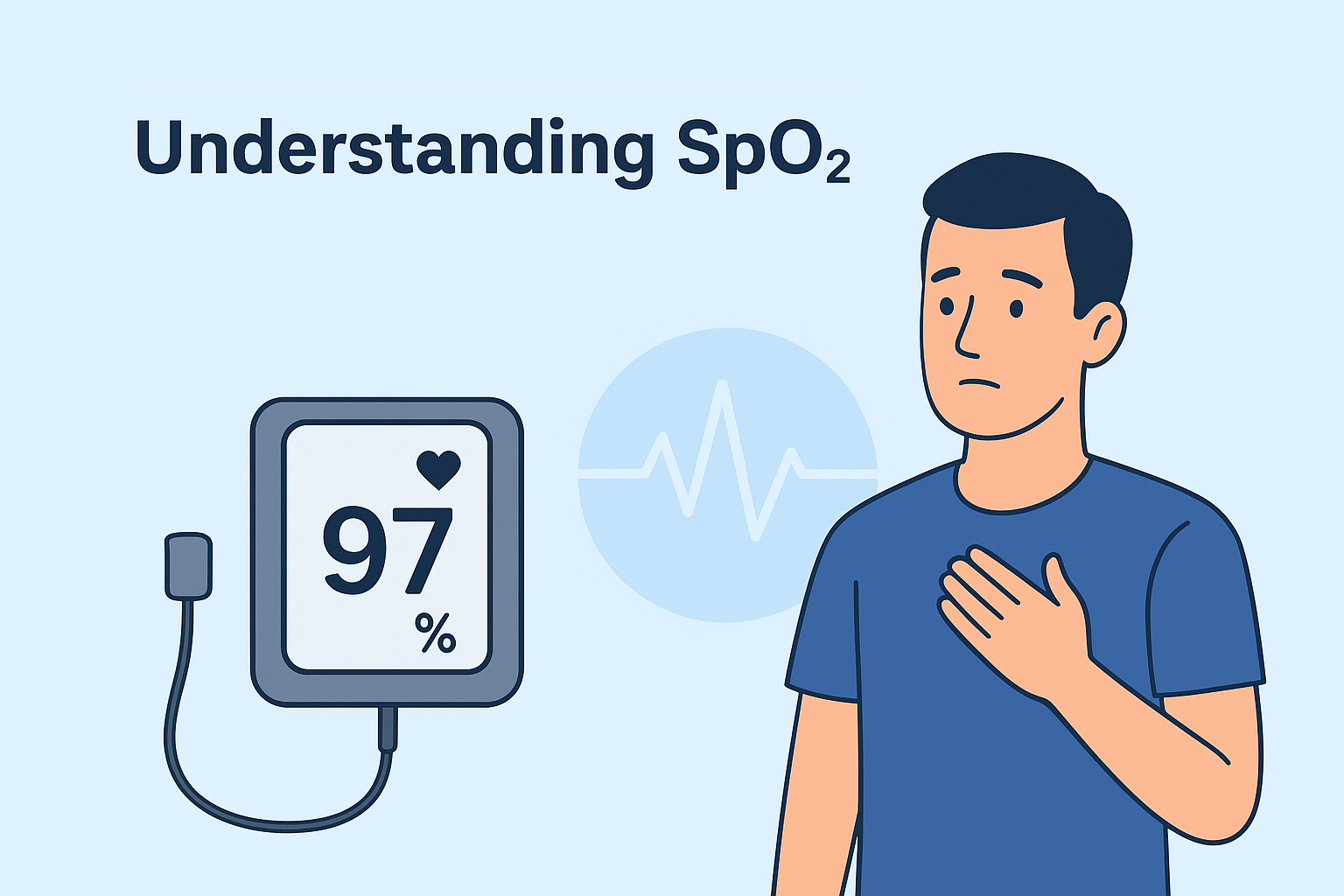
🩸 What Is SpO₂, Exactly?
SpO₂ stands for peripheral capillary oxygen saturation — a measure of how much oxygen your client’s red blood cells are carrying.
Wearables and pulse oximeters usually display SpO₂ as a percentage:
- 98–100% – Optimal for most healthy adults
- 95–97% – Normal and generally not concerning
- Below 94% – May indicate breathing, altitude, or circulation issues
- Below 90% – A red flag that typically requires medical attention
For coaches, SpO₂ isn’t about diagnosing conditions — it’s about understanding how well the body is delivering and utilizing oxygen during sleep, activity, and recovery.
🌬️ Why SpO₂ Matters in Health & Performance Coaching
1. It Reflects Respiratory Health
Low SpO₂ can indicate poor breathing patterns, congestion, altitude effects, or reduced lung efficiency. Clients might report:
- Morning fatigue
- Lightheadedness
- Poor workout tolerance
SpO₂ gives context for these symptoms.
2. It Impacts Recovery & Sleep Quality
Nighttime SpO₂ dips — especially repeated ones — can disrupt deep sleep and REM cycles. This can correlate with:
- Low HRV
- Elevated morning stress markers
- Higher resting heart rate
- Daytime sluggishness
When clients track SpO₂ alongside sleep metrics, coaches gain a clearer window into why recovery may be lagging.
3. It Helps Evaluate Cardio Fitness
During exertion, the body demands more oxygen. Healthy, fit individuals maintain strong SpO₂ levels even under stress. A sudden drop during workouts may signal:
- Overreaching
- Dehydration
- Respiratory strain
- Poor conditioning
Tracking SpO₂ post-training can help coaches tailor intensity safely.
4. It Supports High-Altitude & Endurance Training
For athletes training at elevation, SpO₂ becomes a key marker. It helps coaches monitor adaptation, fatigue risk, and when to adjust workloads.
📊 How Ownership.Health Uses SpO₂ Data
Wearables such as Oura, Garmin, Fitbit, and others offer intermittent or continuous SpO₂ monitoring. Ownership.Health brings this data together and makes it coach-friendly:
- Nighttime SpO₂ trends alongside sleep stages
- Correlations with HRV, RHR, mood, and energy
- Flagged anomalies when oxygen dips coincide with poor recovery
- Patterns over weeks or months to show how habits, stress, illness, or travel affect oxygenation
Instead of raw numbers, coaches get actionable context.
🔍 Example Use Case
A client consistently wakes up tired despite 8 hours of sleep. Inside Ownership.Health, you notice:
- SpO₂ dips below 92% several times a night
- HRV is lower than usual
- Morning stress index is elevated
Together, you explore possible contributors like congestion, allergies, sleep position, or recent illness — and adjust their routine. Within days, their morning energy improves.
🚫 Important Note for Coaches
SpO₂ is not a diagnostic tool. If levels repeatedly fall below 92–94%, or the client experiences symptoms such as breathlessness, chest discomfort, or dizziness, they should be referred to a healthcare professional.
Your role: insight, not diagnosis.
📈 The Takeaway
SpO₂ is a small metric with big implications. When paired with HRV, sleep, mood, and activity data, it becomes a powerful signal for:
- Recovery readiness
- Respiratory efficiency
- Training tolerance
- Overall vitality
Ownership.Health turns these signals into insights that help coaches support clients with clarity and confidence.
Want to bring deeper physiological insights into your coaching? Explore how SpO₂ and other real-time metrics come together inside Ownership.Health to elevate your practice.