
 26.07.2025a year ago
Understanding Health Tracker Data Metrics
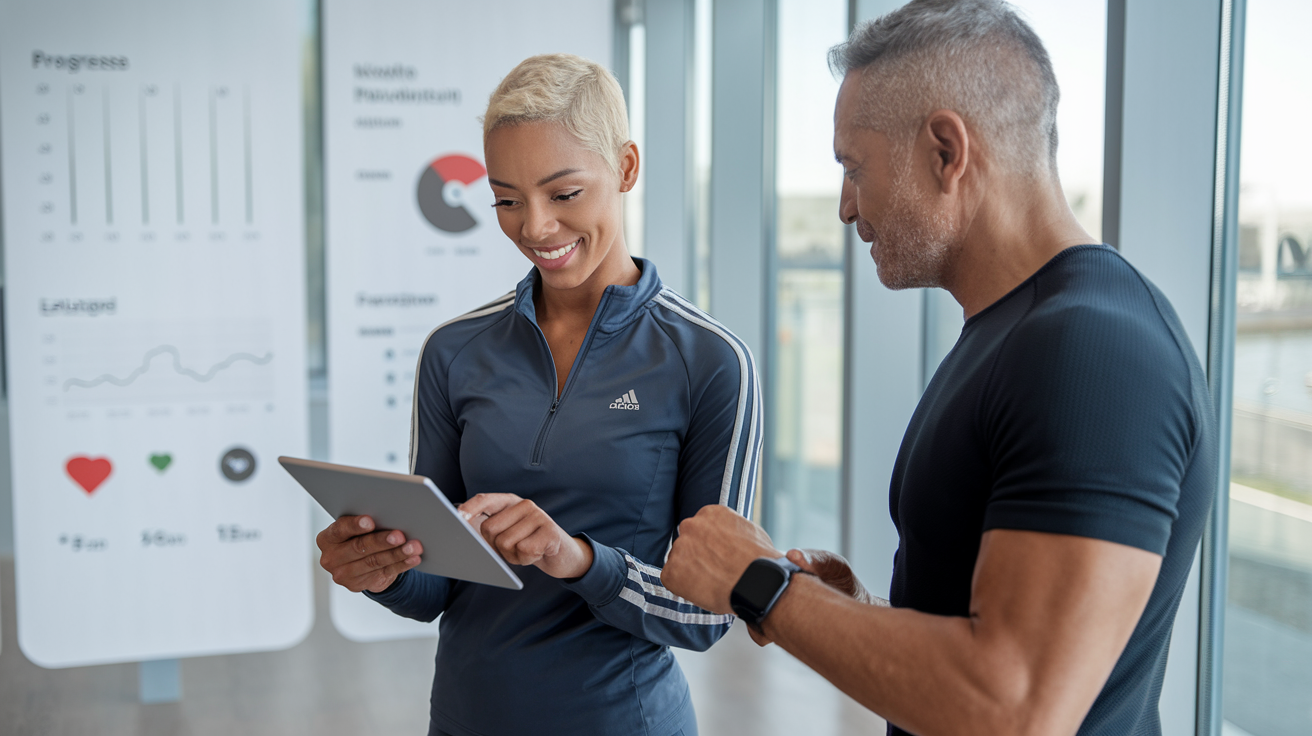
If you’re a coach, nutritionist, or dietitian, you know health tracker data can be a game-changer — helping you tailor care, boost results, and save valuable time. The tricky part? Navigating the endless stream of devices, metrics, and numbers. That’s where Ownership.Health comes in, giving you the tools to turn raw data into actionable insights your clients will love.
What Are Health Tracker Data Metrics?
Health tracker data metrics are the measurable outputs collected by wearables and smart devices — think sleep duration, step count, heart rate variability (HRV), and glucose levels. These metrics provide a window into a client’s daily habits, physiological responses, and overall well-being.
Common Metrics and What They Mean
- Sleep: Trackers measure total sleep time, sleep stages (light, deep, REM), and sleep efficiency. Poor sleep is linked to metabolic, cognitive, and emotional issues. Focus on trends, not single nights, and consider both quantity and quality.
- Activity: Steps, active minutes, and exercise intensity are standard. Advanced trackers add VO2 max and training load. Remember: 10,000 steps isn’t a universal goal — context and intensity matter.
- Heart Rate Variability (HRV): HRV reflects recovery and stress resilience. Higher HRV generally means better recovery, but individual baselines vary. Use trends to guide training and recovery, not as a standalone diagnostic.
- Glucose: Continuous glucose monitors (CGMs) show real-time responses to food, stress, and activity. While increasingly popular, CGMs can cause unnecessary anxiety in non-diabetics and should be interpreted with professional guidance.
Why Trends Matter More Than Single Data Points
Short-term fluctuations — like a spike in weight or a dip in HRV — are normal and often not meaningful. Focus on long-term patterns to guide coaching decisions. For example, a temporary weight increase after a restaurant meal is likely water retention, not fat gain. This approach helps clients avoid unnecessary stress and builds trust in your expertise.
Integrating Multiple Devices for a Complete Picture
Most clients use more than one device — an Oura ring for sleep, a Garmin for activity, a Withings scale for weight. Ownership.Health’s cross-device sync merges, cleans, and organizes all this data, so you always get the full picture. This integration:
- Eliminates data silos
- Reduces manual entry
- Saves hours of analysis
With all client data in one place, you can spot trends, flag key changes, and deliver truly personalized coaching.
The Power of Context: Combining Objective and Subjective Data
Numbers alone don’t tell the whole story. Combine quantitative metrics (steps, calories, HRV) with qualitative feedback (energy, mood, stress) for a holistic view. For example, a client may hit their activity goals but report low energy — prompting a conversation about recovery or nutrition.
Ownership.Health’s habit & health tracking makes it easy for clients to log subjective data alongside their wearables, giving you instant, organized insights.
Personalization: Tailoring Metrics to Each Client
Not every client needs to track every metric. Some may benefit from focusing on behaviors or subjective well-being rather than weight or calories. Use Ownership.Health’s customizable dashboards to highlight the most relevant metrics for each client, supporting more personalized and effective care.
Decoding Data with AI Copilot
Interpreting health tracker data metrics can be time-consuming. Our AI Copilot for Coaches decodes client data, explains trends, flags key changes, and suggests next steps — saving you hours of manual analysis. This means you can spend less time crunching numbers and more time supporting your clients.
Addressing Data Overload and Misconceptions
Too much data can overwhelm both clients and coaches. Focus on a few key metrics that align with client goals. Educate clients about what the data means — and what it doesn’t. For example, reassure them that daily weight changes are normal and not always meaningful.
As one expert notes:
“Tracking can help build confidence and reduce the anxiety that they’re ‘not good enough.’ Here, you empower them by shining a spotlight on existing performance. Expert assurance can go a long way but can also be bolstered by reliable data.”
Ensuring Data Privacy and Compliance
Wearable data is sensitive and subject to privacy regulations like HIPAA (US) and GDPR (Europe). Ownership.Health is committed to data privacy and ownership — clients own their data, with no third-party reselling or platform lock-in. Our built-in, encrypted video calls and secure messaging keep your communications compliant and confidential.
For more on data privacy in health tech, see HHS.gov HIPAA guidelines and European Commission GDPR.
Recent Trends in Wearable Health Tech
- Integration of Multiple Sensors: Modern wearables now combine sleep, activity, HRV, and sometimes glucose monitoring in one device.
- Continuous Monitoring: CGMs and advanced HRV tracking are becoming more common, even among non-clinical populations.
- Data Interoperability: Platforms like Ownership.Health allow seamless syncing from various devices, making it easier to monitor and interpret client progress.
For a deeper dive into wearable trends, check out The Lancet Digital Health and NIH’s Wearable Sensors Overview.
Overcoming Common Challenges
- Data Overload: Prioritize key metrics that align with client goals.
- Misinterpretation: Provide context and reassurance about normal fluctuations.
- Device Accuracy: Use data as a guide, not an absolute truth — no device is perfect.
Ownership.Health helps you overcome these challenges with custom AI coaching assistants that can chat with clients, summarize progress, suggest habits, and keep engagement high between sessions.
Practical Tips for Coaches
- Focus on trends, not single data points.
- Personalize which metrics are tracked for each client.
- Educate clients about what the data means — and what it doesn’t.
- Use integrated platforms to streamline data management.
- Address data anxiety and misconceptions proactively.
- Ensure compliance with privacy and medical device regulations.
How Ownership.Health Sets You Apart
Unlike generic tracking apps or single-device platforms, Ownership.Health is built for modern coaches who want to work smarter, not harder. Our platform:
- Aggregates and organizes data from all major wearables
- Decodes trends and suggests next steps with AI Copilot
- Keeps data secure and client-owned
- Delivers clear, visual reports to communicate progress and build trust
- Supports scalable, personalized coaching — from weight loss to athletic performance
Ready to simplify your workflow and deliver better results? Learn more at Ownership.Health.
FAQ: Understanding Health Tracker Data Metrics
Q: Which health tracker metrics are most important for my clients? A: It depends on your client’s goals. Commonly useful metrics include sleep, activity, HRV, and glucose. Focus on those that align with their objectives and lifestyle.
Q: How do I help clients avoid anxiety about their data? A: Educate them about normal fluctuations and focus on long-term trends. Use data to validate progress and build confidence, not to micromanage every detail.
Q: Can I sync data from multiple devices? A: Yes! Ownership.Health supports cross-device sync with Oura, Garmin, Fitbit, Apple Health, Withings, and more — giving you a unified view of client progress.
Q: Is client data secure and private? A: Absolutely. Ownership.Health is GDPR and HIPAA-compliant. Clients own their data, and all communications are encrypted.
Q: How can I use health tracker data to personalize coaching? A: Use integrated dashboards to highlight the most relevant metrics, combine objective and subjective data, and leverage AI tools to decode trends and suggest next steps.
Further Reading
- CDC: Physical Activity Basics
- Sleep Foundation: Understanding Sleep Trackers
- NIH: Wearable Sensors Track Health
- The Lancet Digital Health
- Ownership.Health
Empower your coaching with understanding health tracker data metrics — and let Ownership.Health be your partner in delivering results at scale.