
 11.08.2025a year ago
Using Fitness Trackers for Heart Conditions: A Data-Driven Approach
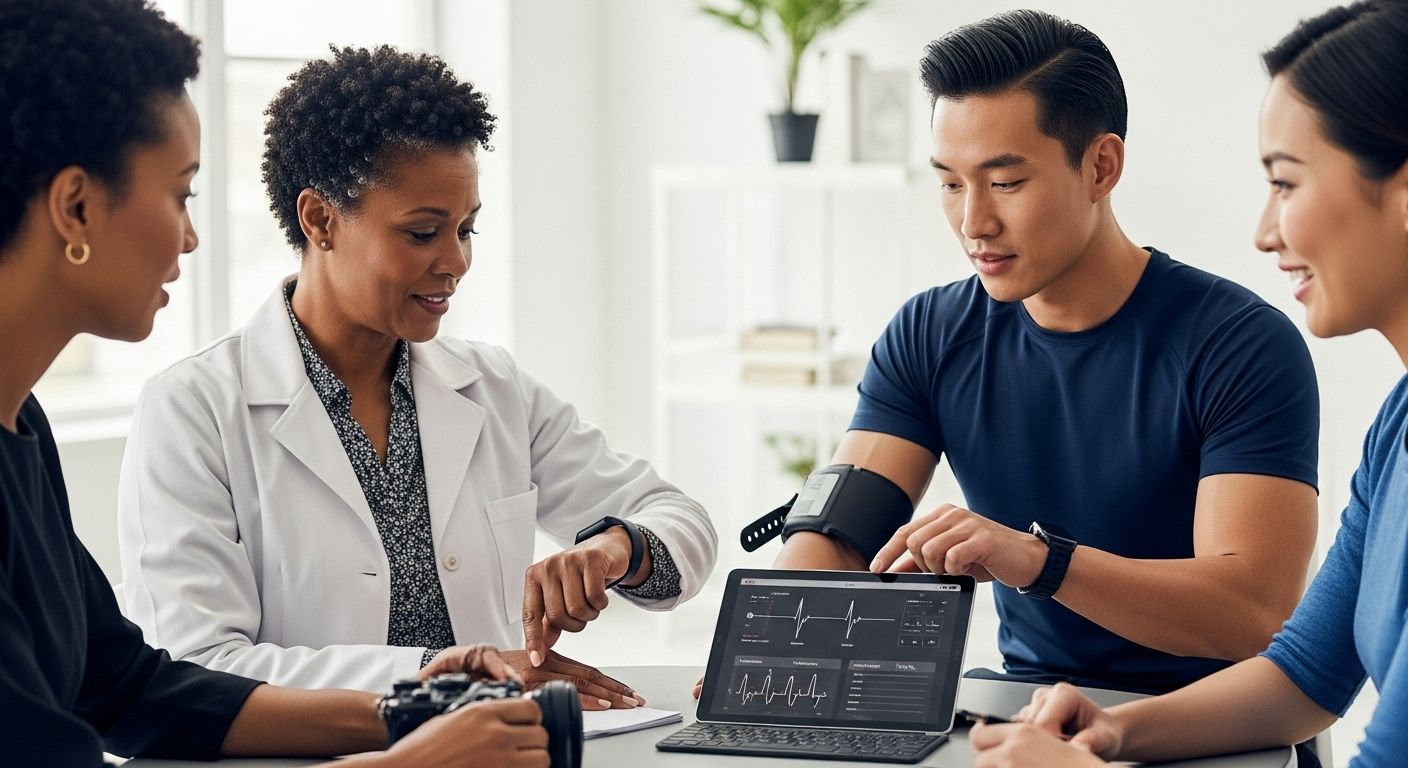
As health tech continues to evolve, fitness trackers are playing a bigger role in managing heart conditions — and changing the way coaches, nutritionists, and dietitians support their clients. With heart disease still the leading cause of death in the U.S., the ability to track and respond to real-time health data has never been more important. Tools like Ownership.Health make it easier for professionals to deliver care that’s not just smarter, but safer and more personalized.
The Power of Fitness Trackers in Heart Health
Fitness trackers and wearables have moved far beyond counting steps. Devices such as Oura, Garmin, Fitbit, Apple Health, and Withings now offer continuous heart rate monitoring, ECG readings, sleep analysis, and even VO2 max estimation — a key marker of cardiovascular fitness. According to recent research, nearly 130 million U.S. adults are affected by some form of cardiovascular disease, and the adoption of wearables is projected to reach over 6.5% of the population by 2028.
Key Value: These devices provide coaches with a continuous, objective window into a client’s cardiovascular health — enabling early detection, personalized feedback, and proactive intervention.
Data-Driven Insights: Beyond the Basics
Recent breakthroughs have shown that combining metrics — such as average daily heart rate divided by steps — can more accurately reflect cardiovascular fitness than either measure alone. This approach captures how the heart responds to daily stress and activity, not just the amount of exercise performed.
“The metric we developed looks at how the heart responds to exercise, rather than exercise itself... It gets at the core issue of capturing the heart’s capacity to adjust under stress as physical activity fluctuates throughout the day.” — Zhanlin Chen, Northwestern University Feinberg School of Medicine
How Coaches Can Use Fitness Tracker Data for Heart Conditions
1. Early Detection & Continuous Monitoring
Wearables can detect arrhythmias (like atrial fibrillation), monitor oxygen saturation, and flag abnormal heart rates. Devices such as KardiaMobile 6L are FDA-cleared for portable ECG monitoring, providing clinical-grade data in seconds. This empowers coaches to identify early warning signs and refer clients for medical evaluation when necessary.
2. Personalized Activity & Recovery Plans
National guidelines recommend at least 150 minutes of moderate-intensity activity weekly for heart health. Fitness trackers help clients meet these targets by providing real-time feedback and motivation. Coaches can set individualized goals, monitor progress, and adjust plans based on trends in heart rate, sleep, and recovery.
3. Supporting Post-Event Recovery
For clients recovering from heart attacks or managing chronic heart failure, wearables offer medication reminders, care plan guidance, and educational content. The MiCORE trial demonstrated that such digital interventions can reduce hospital readmissions and improve recovery outcomes.
“Watching oxygen levels and seeing them decline could alert us to decompensation early. These tools give us a way to help heart failure patients stay healthier and out of the hospital.” — Dr. Robert Shapiro
4. Motivating and Educating Clients
Real-time data fosters engagement and accountability. Coaches can use visual dashboards and progress reports to celebrate wins, address setbacks, and educate clients on the importance of regular monitoring and lifestyle changes.
Why Ownership.Health Is Different
Generic fitness apps offer basic metrics and limited integration. Ownership.Health is designed for professionals who demand more:
- Cross-Device Sync: Merge data from Oura, Garmin, Fitbit, Apple Health, Withings, and more for a complete health picture.
- AI Copilot for Coaches: Instantly decode trends, flag key changes, and receive actionable next steps — saving hours of manual analysis.
- Custom AI Coaching Assistants: Deliver personalized, scalable support in your own coaching style, keeping clients engaged between sessions.
- Glucose & Biomarker Monitoring: Go beyond heart rate — track glucose and other biomarkers for a holistic view of metabolic and cardiovascular health.
- Client Dashboards & Reports: Clean, visual reports build trust and make it easy to communicate progress.
- Data Privacy & Ownership: Clients own their data. No reselling, no lock-in, and full export options. All features are GDPR and HIPAA-compliant.
Key Value: Ownership.Health empowers coaches to deliver more precise, proactive, and personalized support — without the overwhelm of manual data wrangling.
Integration, Privacy, and Best Practices
Seamless Integration
Unlike generic apps, Ownership.Health aggregates and cleans data from multiple devices, providing deep analytics and tailored interventions. Integration with electronic health records and secure sharing with clinicians enhances care coordination.
Privacy and Compliance
With increasing concerns about data privacy, it’s essential to use platforms that are HIPAA-compliant and offer robust encryption and consent management. The American Heart Association emphasizes the need for equitable access and strong privacy protections in digital health.
Best Practices for Coaches
- Set personalized goals based on device data (activity, nutrition, recovery).
- Monitor trends and adjust plans proactively.
- Educate clients on using devices and interpreting their data.
- Address barriers to technology access, especially for underserved clients.
Real-World Impact: Case Studies and Research
- The American College of Cardiology’s 2025 session introduced new wearable-based metrics for cardiovascular fitness, focusing on the heart’s response to daily activity.
- The MiCORE trial showed improved recovery and reduced readmissions for post-heart attack patients using wearables and app-based coaching.
- The American Heart Association’s 2025 statement calls for broader access to digital health tools to improve outcomes for high-risk populations.
Ownership.Health vs. Generic Fitness Apps
Feature | Generic Fitness Apps | Ownership.Health |
|---|---|---|
Heart-specific metrics | Basic (HR, steps) | Advanced (ECG, VO2 max, arrhythmia) |
Data integration | Limited | Multi-device, EHR integration |
Professional oversight | Rare | Clinician-reviewed analytics |
Privacy controls | Basic | Enhanced, HIPAA-compliant |
Personalized coaching | Generalized | Tailored to heart condition needs |
Actionable insights | Limited | Deep analytics, early warning |
Frequently Asked Questions
Can fitness trackers really help manage heart conditions?
Yes. Modern fitness trackers can detect arrhythmias, monitor heart rate variability, and track recovery — providing actionable data for both prevention and management of heart conditions. Studies show that wearables can improve outcomes, especially when combined with professional coaching and personalized interventions.
How does Ownership.Health ensure data privacy?
Ownership.Health is fully GDPR and HIPAA-compliant. Clients own their data, which is never resold or locked in. All data is encrypted, and clients can export their information at any time.
What makes Ownership.Health better than Apple Health or Fitbit alone?
While Apple Health and Fitbit offer valuable data, Ownership.Health brings all device data together, cleans and organizes it, and provides AI-driven insights tailored for professional coaches. This enables more comprehensive, personalized, and scalable support for clients with heart conditions.
Can I use Ownership.Health with clients who have multiple devices?
Absolutely. Our platform syncs with Oura, Garmin, Fitbit, Apple Health, Withings, and more — merging all data for a complete, unified view of each client’s health.
Where can I learn more about using fitness trackers for heart conditions?
- American Heart Association: Wearable Technology and Heart Health
- FDA: Digital Health Devices
- Centers for Disease Control: Heart Disease Facts
- Northwestern Medicine: Fitness Trackers and Heart Health
For more on how Ownership.Health can help you deliver data-driven, personalized coaching for clients with heart conditions, visit ownership.health.
Empower your coaching with data-driven insights, seamless integration, and privacy-first design — because your clients deserve the best in heart health support.